How I Stopped Revenge Trading (The One Habit That Fixed Everything)
Revenge trading cost me thousands before I figured out what was happening. Here's the simple habit that broke the cycle and why most traders skip it.
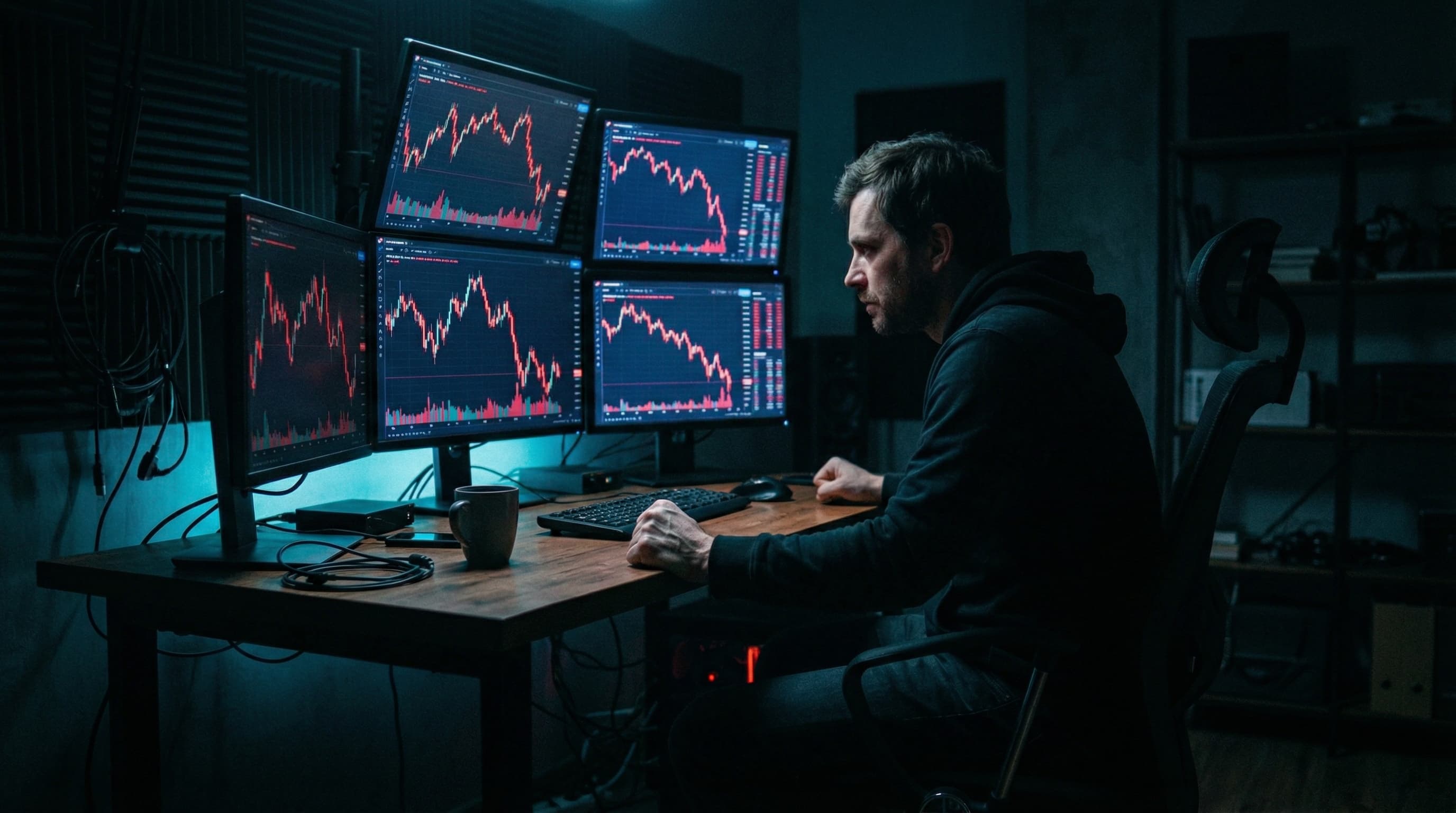
We need to talk about revenge trading. Not the textbook definition — the real thing. The thing where you stare at your P&L after a bad loss, feel your chest tighten, and immediately scan for the next setup that'll "make it back."
I've been there. More times than I'd like to admit.
And if you're being honest with yourself, you've probably been there too.
What Revenge Trading Actually Looks Like
Here's the thing nobody tells you: revenge trading doesn't feel like revenge trading when you're doing it. It feels like conviction. It feels like you're seeing a clear setup. It feels rational.
But it's not.
It usually looks something like this:
- You take a normal loss. Maybe 1-2% of your account. Textbook risk management. Nothing wrong.
- Something snaps. Not dramatically — just a quiet shift. You feel the need to "get it back" before the session ends.
- You take another trade. Bigger size. Looser stop. You tell yourself the setup is there.
- That trade goes against you too. Now you're down 4-5% instead of 1-2%.
- One more. You're sure this time. You double down.
- By end of day, a manageable -$600 loss has become -$2,100. A bad day has become a terrible week.
Sound familiar?
The numbers in that example aren't random. They came from my own trades. A clean 2% loss ballooned into 7% of my account — in a single afternoon — because I refused to walk away.
The Real Cost Is Bigger Than One Bad Day
Revenge trading doesn't just cost you money on the trade. It costs you in ways that don't show up on any P&L chart:
It destroys your edge. Every strategy has a statistical edge that only works when you execute it consistently. The moment you deviate — wider stops, bigger size, forcing entries — you're no longer trading your strategy. You're gambling.
It erodes your confidence. After a revenge trading spiral, the next trading day starts with doubt. You second-guess entries you'd normally take without hesitation. The damage compounds over days and weeks.
It distorts your data. If you're tracking your performance (and you should be), revenge trades pollute your analytics. Your win rate, average R, hold time — all of it gets skewed by trades you never should have taken.
It creates a feedback loop. Bad trade leads to revenge trade, which leads to bigger loss, which leads to more revenge trading. I've watched this cycle eat weeks of disciplined gains in a single session.
Research consistently shows that emotional decision-making costs retail traders between 1.5% and 3% in annual returns compared to systematic, rule-based approaches. Over a career, that's tens of thousands — or more.
Why "Just Be Disciplined" Doesn't Work
You've probably heard the advice: "Just walk away after a loss." Or: "Set a daily loss limit and stop trading when you hit it."
That's fine in theory. But in practice, when your amygdala is firing and your account is bleeding red, willpower alone isn't enough. Your brain literally processes financial losses the same way it processes physical threats. You're not making a rational decision to keep trading — you're in fight-or-flight mode.
This is why most traders can describe the problem perfectly but still can't stop doing it. Knowing about revenge trading and preventing revenge trading are two completely different skills.
So what actually works?
The Habit That Changed Everything
I'm going to be honest — this isn't some secret technique or proprietary framework. It's embarrassingly simple.
I started journaling every single trade.
Not at the end of the week. Not in a spreadsheet I'd look at once a month. Every trade, right after I closed it. Entry, exit, what I was thinking, what I was feeling, whether it followed my rules.
Here's why this works when willpower doesn't:
It creates a pause
The act of opening your journal and writing down what just happened forces a 60-second gap between the loss and your next action. That gap is everything. It's the difference between a reactive click and a deliberate decision.
Most revenge trades happen within minutes of the triggering loss. Even a short interruption breaks the emotional momentum.
It makes the pattern undeniable
After two weeks of journaling, I noticed something I'd never seen before: almost every revenge trade happened on the same type of setup — late-day breakouts after I'd already taken a loss that morning.
I didn't need a therapist to tell me to avoid that pattern. The data was right there in my own words. I could see it.
One trader I read about discovered through journaling that he was overtrading specifically on Monday mornings. Twenty consecutive Mondays of data showed a 35% win rate before 10 AM versus 58% after. A simple rule — no trades before 10 AM on Mondays — transformed his week.
You can't fix what you can't see. And you can't see it if you're not writing it down.
It turns losses into data
This is the real shift. When you journal every trade, losses stop being failures and start being information. A loss isn't something that happened to you — it's a data point that tells you something about your process.
That reframe changes everything. When a loss is data, there's nothing to avenge.
It builds a record you can trust
Here's something that surprised me: my memory of my own trades was terrible. I'd remember winning trades as bigger than they were and losing trades as bad luck. My journal showed me the truth — that most of my losses came from breaking my own rules, not from the market being unfair.
Your brain will lie to you. Your journal won't.
What to Actually Write Down
You don't need a 20-field form. Keep it simple enough that you'll actually do it:
- Date and time — When did you enter and exit?
- Symbol and direction — What did you trade and which way?
- Setup — What was the reason for the trade? Was it part of your strategy?
- Emotions before entry — Were you calm, anxious, frustrated, excited? Be honest.
- Did it follow your rules? — Yes or no. If no, which rule did you break?
- Result — P&L, R-multiple if you track that.
- One sentence on what you learned — Force yourself to extract something useful.
The emotions field is the most important one. It's also the one most traders skip.
When I look back at my journal entries, the correlation between "frustrated" or "need to make it back" in the emotions field and a losing trade is almost perfect. That field alone has saved me thousands.
The Compound Effect of Consistent Journaling
After about a month of journaling every trade, something unexpected happened. I didn't just stop revenge trading — I started trading better in general.
I noticed which setups actually had edge and which ones I was taking out of boredom. I saw that my best trades all shared a specific characteristic I'd never consciously identified. I realized I was overcomplicating my entries when simplicity worked better.
None of this was visible before I had the data. It was all hidden inside scattered trades and fuzzy memories.
This is the part most people don't talk about when they recommend trading journals. It's not just about avoiding bad trades — it's about discovering what your best trades have in common and doing more of that.
Your equity curve is a story. Your journal is how you read it.
Making It Stick
I'll be real: journaling every trade is annoying at first. After a loss, the last thing you want to do is write about it. After a win, you just want to move on to the next one.
Here's what helped me stay consistent:
Make it fast. If it takes more than 90 seconds per trade, you won't do it. Use a tool that makes entry quick — not a blank notebook, not a complicated spreadsheet.
Do it immediately. Not at end of day. Not on the weekend. Right after you close the position. The emotional data is freshest in that moment, and that's the most valuable part.
Review weekly. Every Sunday, spend 20 minutes reading your entries from the week. Look for patterns. Look for rule breaks. Look for the emotional states that preceded your worst trades.
Don't judge — just observe. The journal isn't there to make you feel bad. It's there to show you what's actually happening versus what you think is happening.
The Traders Who Journal Keep Winning
There's a reason every consistently profitable trader I've talked to keeps some form of journal. It's not because they're more disciplined by nature — it's because the journal creates the discipline.
You don't need more indicators. You don't need a better strategy. You don't need to read another trading psychology book.
You need a mirror. Something that shows you exactly what you're doing, when you're doing it, and how it's affecting your results.
That's what a trading journal is. And once you see the patterns — the revenge trades, the FOMO entries, the rule breaks — you can't unsee them.
The question isn't whether you can afford to spend 90 seconds journaling each trade.
The question is whether you can afford not to.
If you're ready to start journaling your trades without the friction of spreadsheets and notebooks, Reflectrade was built for exactly this. Log trades in seconds, tag your emotions, track rule compliance, and let your data show you where your edge actually lives. It's free to start.